Why Fermentation is the Secret Ingredient in Every Culture
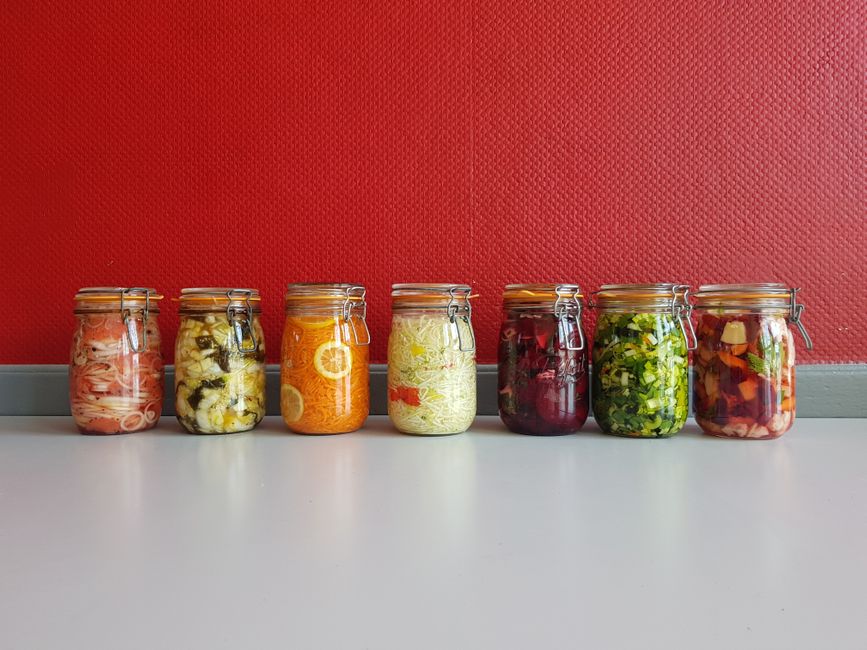
Before refrigeration, before canning, before any of the modern methods of food preservation, almost every culture on Earth independently discovered fermentation. And in doing so, they accidentally created some of the most complex, flavourful and nutritious foods in human history. Fermentation is not a technique — it is a transformation. Ordinary cabbage becomes kimchi. Soybeans become miso or soy sauce. Milk becomes cheese or yoghurt. Grapes become wine. Barley becomes beer. Wheat flour and water become sourdough. In each case, microorganisms — bacteria, yeasts, moulds — consume the original ingredients and produce something entirely new.
The Korean kimchi tradition is perhaps the world's most sophisticated fermentation culture. Baechu-kimchi, made from napa cabbage, gochugaru, garlic, ginger and salted shrimp, undergoes a lactic acid fermentation driven by Lactobacillus bacteria naturally present on the vegetables. As fermentation proceeds over days, weeks or months, the kimchi becomes progressively more sour, complex and funky. Freshly made kimchi is bright and crunchy; six-month-old kimchi is deeply sour, almost fizzy, and transforms into a completely different ingredient used for kimchi jjigae and kimchi pancakes.
Japan's fermentation tradition is equally remarkable. Miso is made by fermenting soybeans with salt and a mould called koji (Aspergillus oryzae) — a process that can take anywhere from weeks to years. White miso ferments briefly and tastes mild and sweet. Red miso ferments for up to three years and develops a deep, almost meaty intensity. Soy sauce uses the same koji mould applied to a mixture of soybeans and wheat, fermented for months. The result is one of the most umami-rich substances known to cooking.
In Ethiopia, injera is made from teff flour fermented with wild yeasts for two to three days. The fermentation produces lactic acid, giving the flatbread its characteristic sourness, and carbon dioxide, which creates the distinctive porous, spongy texture. The fermentation also makes the teff's nutrients more bioavailable — an important consideration in a diet where injera is eaten at almost every meal. In West Africa, locust beans are fermented to produce iru or dawadawa — a pungent, deeply flavoured seasoning used as a flavour base similar to the role of fish sauce in Southeast Asia.
The science of why fermentation improves flavour is now well understood. Microorganisms produce enzymes that break down proteins into amino acids (including glutamate, the source of umami), starches into sugars, and fats into fatty acids. They produce organic acids that add sourness and brightness. They produce esters and other aromatic compounds that add fruity, floral and earthy notes. The result is food that is more complex, more digestible and often more nutritious than the raw ingredients.
For home cooks, the practical message is simple: fermented ingredients are flavour shortcuts. A spoonful of miso adds weeks of fermentation complexity to a dish. A good aged parmesan — itself a fermented product — adds a deep savouriness that young cheese cannot match. A properly fermented hot sauce has a rounded, complex heat that fresh chillies alone cannot produce. Learning to use fermented condiments — miso, fish sauce, soy sauce, gochujang, preserved lemons, good vinegars — is one of the fastest ways to add depth to everyday cooking.