Rice: The Grain That Feeds Half the World
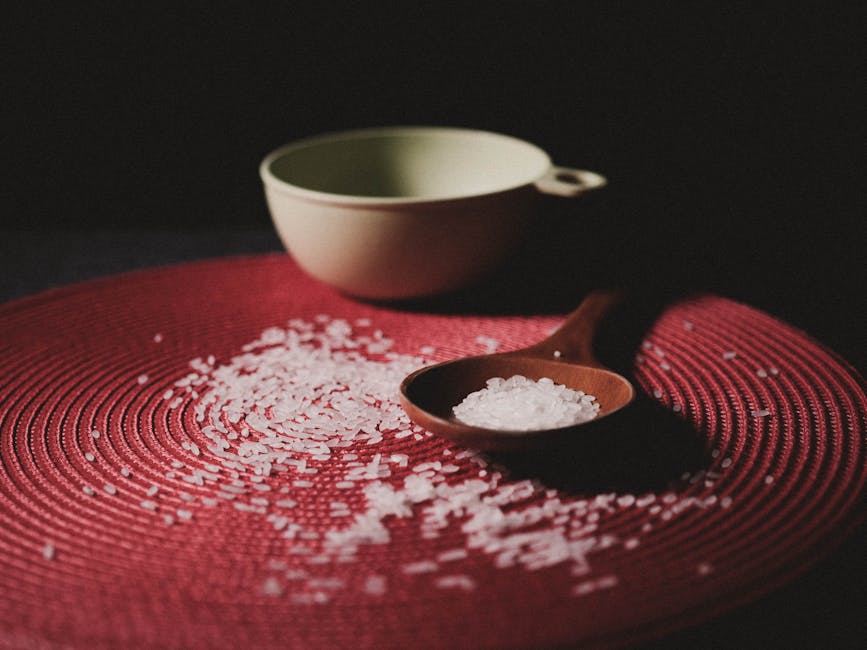
Rice is the staple food for more than half the world's population, and yet most cooks only ever use one or two varieties, unaware of how dramatically different rice can behave depending on its starch composition. Nearly all commonly eaten rice belongs to the same species, Oryza sativa, but different varieties within that species contain very different ratios of two starch types — amylose and amylopectin — and that ratio is what determines whether a rice ends up fluffy and separate, sticky and clingy, or somewhere in between.
Long-grain rices like basmati and jasmine are relatively high in amylose. Amylose molecules are straight chains that don't bond together tightly during cooking, which is why basmati and jasmine rice cook up light, fluffy and with distinct, separate grains. Basmati has the added characteristic of elongating significantly during cooking — a good basmati grain can nearly double in length — and carries a distinctive aromatic quality from a naturally occurring compound called 2-acetyl-1-pyrroline, the same compound partly responsible for the smell of fresh bread crust.
Short and medium-grain rices, by contrast, are higher in amylopectin, a branched starch molecule that creates a stickier, more cohesive texture as it cooks. This is why sushi rice, risotto rice (arborio, carnaroli) and the short-grain rice used in Korean and Japanese cooking clump together rather than staying separate. This isn't a flaw — it's exactly the texture those cuisines are built around. Sushi rice needs to hold together to be formed and eaten with chopsticks or by hand. Risotto relies on the starch releasing into the cooking liquid as it's stirred, creating the dish's characteristic creamy consistency without any cream being added at all.
Glutinous rice (sometimes called sticky rice or sweet rice, despite containing no gluten) sits at the extreme end of the amylopectin spectrum, and is used across Southeast Asian cooking for dishes like Thai mango sticky rice and Laotian khao niew. It's typically soaked and steamed rather than boiled, a method that suits its very high amylopectin content and produces the dense, chewy, almost translucent texture the dish is known for.
Washing rice before cooking is one of the most commonly debated steps, and the amylose-amylopectin distinction explains why the advice differs by rice type. Washing rinses away surface starch, which matters enormously for short-grain and sushi rice recipes where excess surface starch can make the rice gummy rather than pleasantly sticky. For basmati, washing (and often soaking) serves a slightly different purpose — removing surface starch to help the grains stay separate and reducing breakage, while also allowing the grain to absorb water evenly for that characteristic elongation. Risotto rice, on the other hand, is deliberately never washed, since the whole technique depends on that surface starch releasing into the dish as it cooks.
Understanding rice this way changes how you shop and cook. The right rice for a dish isn't really about following tradition for its own sake — it's about matching starch behaviour to the texture the dish actually needs. Using basmati for risotto or arborio for pilaf will produce a technically edible but fundamentally wrong result, because you'd be fighting against, rather than working with, the rice's natural starch chemistry.