Salt: The Only Rock We Eat
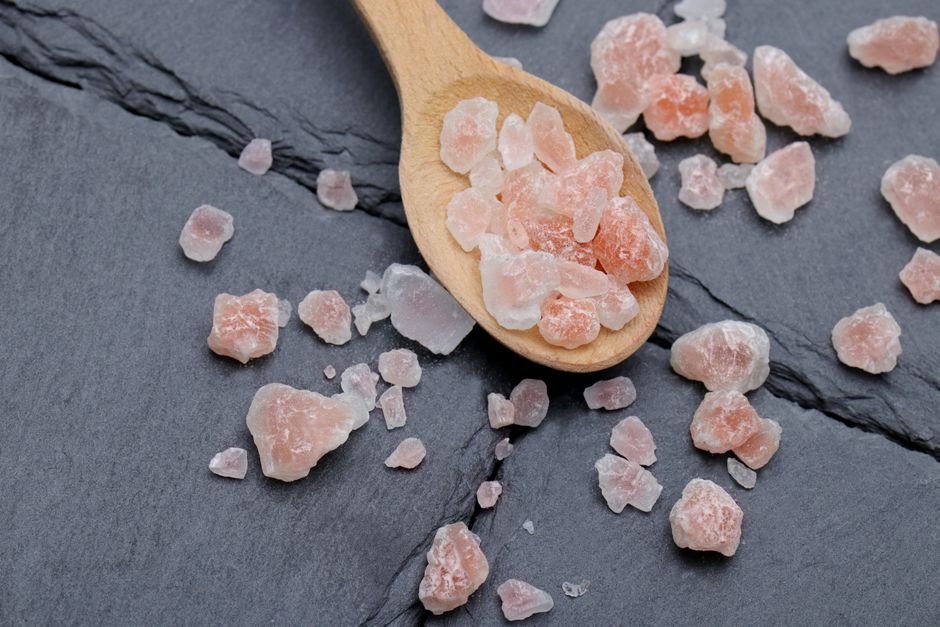
Salt is unique among seasonings: it is, chemically, sodium chloride — the same compound regardless of source — and yet cooks are famously particular about which type they use for which purpose. That's not pretension. The differences between salt types have almost nothing to do with flavour and almost everything to do with crystal shape, size and density, all of which change how salt behaves in the kitchen even though the underlying chemistry is identical.
Table salt is mined or evaporated and then processed into small, dense, uniform cubic crystals, often with anti-caking agents added and, in many countries, iodine — added since the early 20th century as a public health measure to prevent iodine deficiency disorders. Because the crystals are small and dense, table salt packs tightly into a measuring spoon, meaning a teaspoon of table salt contains meaningfully more actual salt by weight than a teaspoon of a coarser salt. This is the single most common cause of over-salting when a recipe writer used one salt type and the cook used another.
Kosher salt, widely used by professional cooks in the United States, has larger, more irregular flake-like crystals (the name refers to its traditional use in koshering meat by drawing out blood, not to any religious certification of the salt itself). Its larger, less dense crystals mean it's easier to pinch and sprinkle evenly by hand, and its lower density per volume makes it more forgiving to season by eye — a genuine practical reason professional kitchens favour it, beyond habit.
Sea salt is produced by evaporating seawater, and its crystal structure varies significantly depending on production method — some sea salts are fine and dense, others form larger, more irregular crystals. Because it's derived directly from seawater rather than being mined, sea salt often carries trace minerals (magnesium, calcium, potassium) that can introduce subtle flavour differences, though at the small quantities used in cooking these differences are usually minor compared to the dominant effect of the sodium chloride itself.
Flaky finishing salts, like Maldon, are prized specifically for their large, thin, pyramid-shaped crystals, produced through a slower evaporation process. These crystals don't dissolve instantly on contact with food the way fine salt does — they retain a brief moment of crunch and a burst of saltiness, which is exactly why they're used as a finishing touch on dishes like a good steak or a chocolate chip cookie rather than mixed into a dish during cooking, where that textural quality would be lost entirely as the crystals dissolve into the sauce or batter.
The practical lesson: for seasoning during cooking, where the salt fully dissolves anyway, the type matters far less than getting the quantity right — and because volume-to-weight ratios differ so much between salt types, it's worth learning how your particular salt measures rather than assuming a teaspoon is a teaspoon. For finishing a dish, where the salt is meant to be seen and felt rather than dissolved, crystal shape and size become the entire point, and a flaky finishing salt will do a job that fine table salt simply cannot replicate.