Why Bread Rises: The Science of Yeast and Gluten
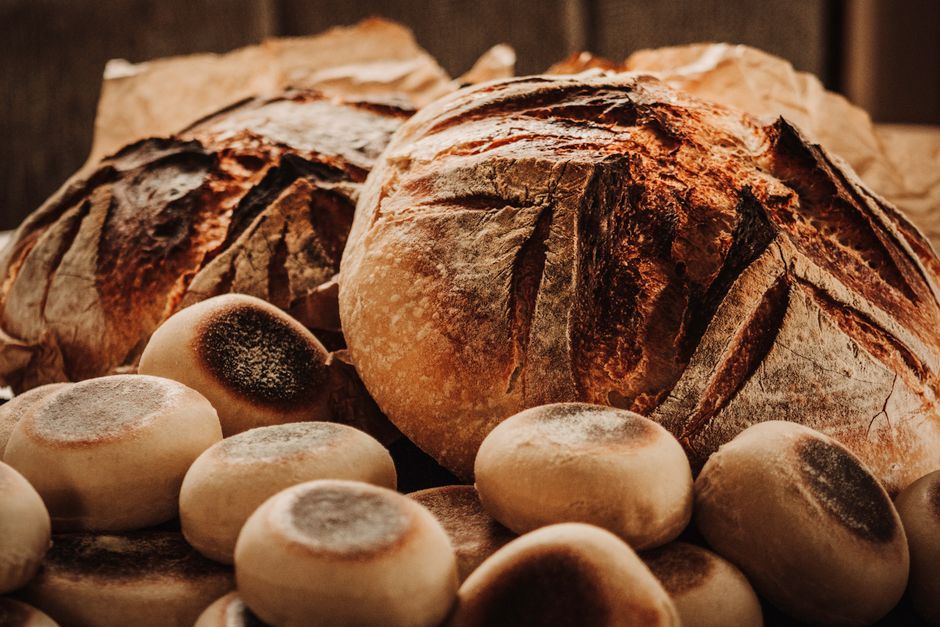
Bread rising looks like a single event, but it's actually the product of two entirely separate processes happening at once: yeast producing gas, and gluten trapping it. Neither one alone would produce a risen loaf. Understanding how they work together explains almost every rule of bread baking, from why you knead dough to why recipes ask you to wait.
Yeast is a single-celled fungus, and the strains used in baking (most commonly Saccharomyces cerevisiae) survive by consuming sugars and starches in the flour and converting them into carbon dioxide and ethanol through fermentation. This is the same basic biological process used in brewing beer and making wine, just optimised for gas production rather than alcohol content. As yeast ferments, it produces thousands of tiny bubbles of carbon dioxide throughout the dough. Left unchecked, this gas would simply escape and the dough would stay flat — which is exactly where gluten comes in.
Gluten is not a single ingredient but a network of two proteins — glutenin and gliadin — naturally present in wheat flour. When flour is mixed with water, these proteins begin to link together, and kneading accelerates and strengthens that linking, forming a stretchy, elastic web throughout the dough. This gluten network is what traps the carbon dioxide bubbles produced by the yeast, allowing the dough to expand rather than simply venting gas into the air. A well-developed gluten network is strong enough to stretch around each bubble without tearing, which is why properly kneaded bread has an open, even crumb, while under-kneaded bread often collapses or stays dense.
Temperature governs the speed of both processes. Yeast ferments fastest in a warm environment (around 27–35°C is typical for baking), which is why recipes call for proving dough somewhere warm. Too hot, however, and the yeast dies rather than accelerates — professional bakers are generally cautious above roughly 60°C, well beyond typical proving temperatures but a useful ceiling to keep in mind. Cold, slow fermentation — leaving dough in the refrigerator overnight — doesn't stop yeast activity entirely, it simply slows it dramatically, which is why long, cold ferments are prized by serious bread bakers: more time allows more complex flavour compounds to develop as a byproduct of fermentation, producing bread with noticeably more depth than a quick same-day loaf.
The final stage — baking — locks the structure in place through a phenomenon called oven spring, where the sudden heat causes a last burst of gas expansion and yeast activity before the yeast dies and the gluten protein sets firm, along with starch gelatinisation, which stiffens the crumb permanently. This is why scoring the top of a loaf before baking matters: it gives the rapidly expanding dough a controlled place to open up, rather than tearing randomly across the surface.
The practical upshot for home bakers: knead enough to build a proper gluten structure, give the yeast a warm enough environment to work without killing it, and don't rush the proving stage if you want real flavour. Bread rising isn't magic — it's two biological processes in careful cooperation, and every step of a good bread recipe exists to support one or the other.