Golden Eagle Festival
Kazakh nomads in Mongolia's westernmost province showcase generations-old eagle hunting traditions alongside besbarmak and airag.
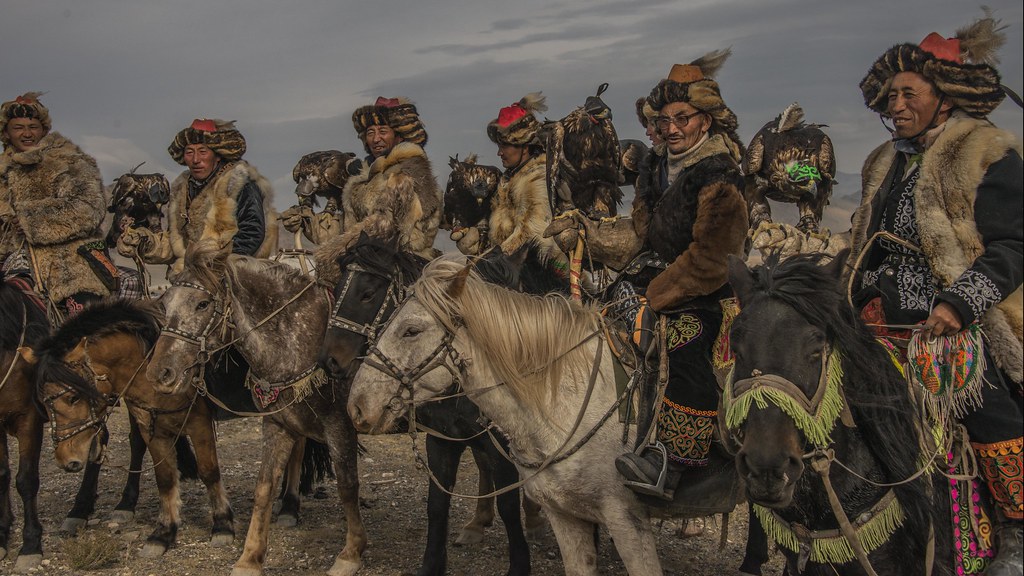
Held during the first week of October in the remote western province of Bayan-Ölgii, the Golden Eagle Festival celebrates the Kazakh nomadic community's centuries-old tradition of hunting with trained golden eagles, a skill passed down through generations of families in this corner of Mongolia. Over two days, competitors demonstrate their eagles' hunting abilities alongside horseback events like kukbar, a rough-and-tumble tug-of-war played from horseback, archery and traditional horse racing.
Food carries genuine cultural weight throughout the festival's proceedings, with airag, fermented mare's milk, offered as a traditional treat to esteemed guests — availability of fresh airag diminishes sharply after late September as mare's milk production naturally declines heading into winter. In Bayan-Ölgii's own restaurants, dishes distinct from Mongolia's more widely known cuisine appear on festival menus, including sirne and besbarmak, a Central Asian dish of boiled meat and hand-cut noodles shared communally, reflecting the region's specifically Kazakh, rather than Khalkha Mongolian, culinary heritage.
For visitors interested in Mongolia's ethnic diversity specifically, the Golden Eagle Festival offers a genuinely distinct cultural experience from the country's Naadam celebrations — a chance to witness a hunting tradition, and an accompanying food culture, found almost nowhere else in the world outside this specific stretch of the Altai Mountains.
Highlights
- ✓Centuries-old Kazakh eagle-hunting tradition
- ✓Held in remote western Mongolia