Aluth Avurudu
The Sinhala and Tamil New Year, when kiribath is prepared at an astrologically determined moment and shared alongside kokis and athirasa sweets.
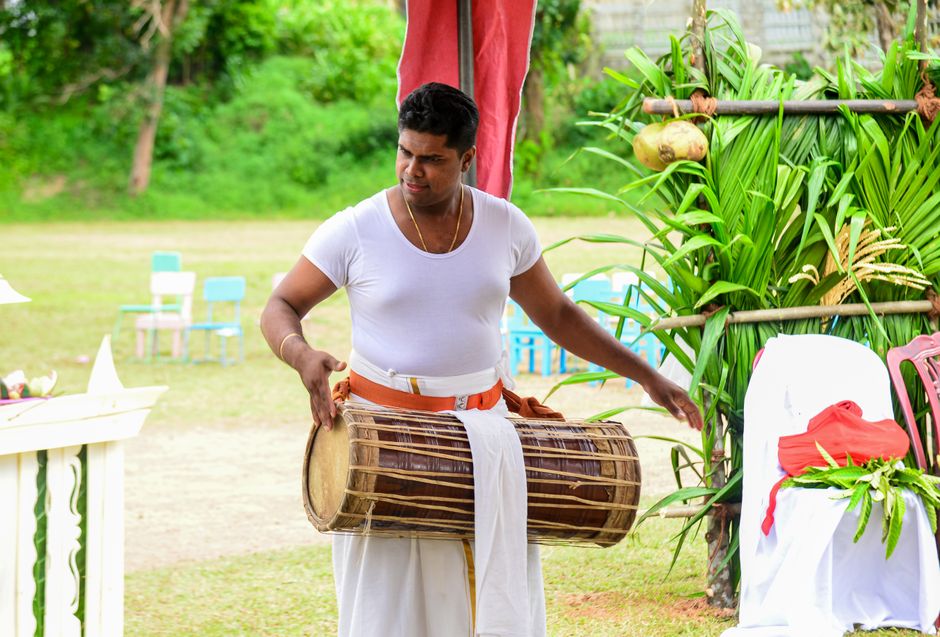
Celebrated each April, Aluth Avurudu, the Sinhala and Tamil New Year, stands as the most food-intensive celebration on the Sri Lankan calendar, observed jointly by both major ethnic communities in a rare shared national tradition. The festival's rituals are governed by astrology in genuinely precise detail — an astrologer determines the exact auspicious moment to light the household fire and prepare kiribath, milk rice, with families waiting for that specific time before beginning the day's cooking.
Alongside kiribath, households prepare large batches of traditional sweetmeats including kokis, delicate rosette-shaped fried treats, athirasa, a rich rice and jaggery sweet, and kavum, oil cakes shared freely between neighbours in a genuine display of communal generosity. Women create detailed patterns on the ground using rice flour and coloured powders to welcome the new year, while farmers bring offerings tied to agriculture and harvest traditions, and even cattle receive decorative attention given their central role in Sri Lankan farming life.
For visitors interested in Sri Lanka's genuinely shared cultural traditions, rather than its more religiously distinct festivals, Aluth Avurudu offers a rare, astrologically precise window into a celebration that transcends the island's ethnic and religious divides — the exact same milk rice, prepared at the exact same determined moment, in households across the country.
Highlights
- ✓Rituals timed astrologically
- ✓Shared Sinhala-Tamil national tradition