Feria de Abril
Seville's Spring Fair, six days of flamenco, horse-drawn carriages and Andalusian tapas that grew from a humble 1847 livestock market.
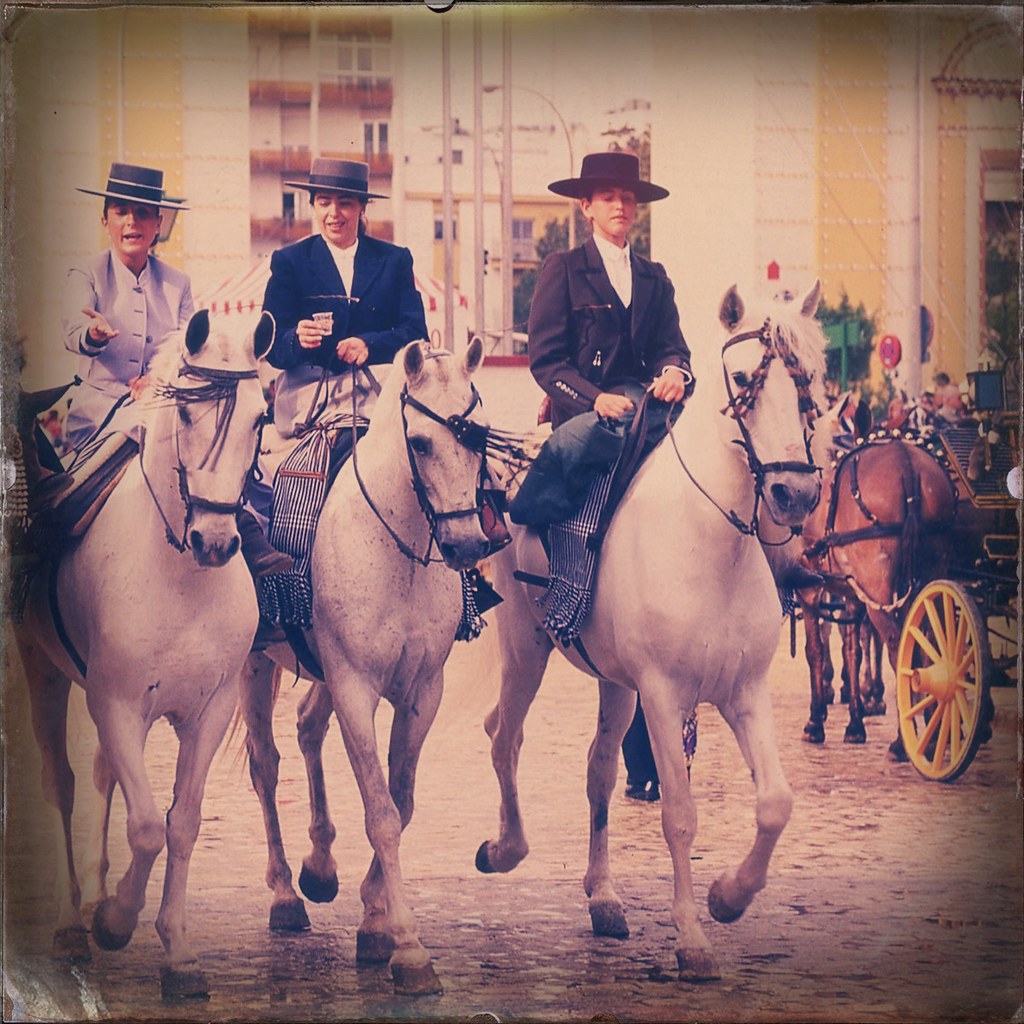
Held each spring, two weeks after Easter, the Feria de Abril traces its origins to 1847, when it began as a modest livestock and agricultural market before gradually transforming into one of Spain's most celebrated cultural festivals. Over six days, Seville fills with more than a thousand striped canvas tents called casetas, most privately owned by families, social clubs and organisations, lining streets that come alive each evening with flamenco dancing and horse-drawn carriage parades.
The festival opens with the Night of Fried Fish, a traditional dinner reflecting Andalusia's deep coastal connections, before six days of tapas built around jamón ibérico de bellota, sliced paper-thin at caseta bars, alongside gazpacho, salmorejo and pringá, a warm sandwich of slow-cooked pork, chorizo and morcilla shredded together with rendered fat. Rebujito, a refreshing blend of manzanilla sherry and lemon-lime soda, flows constantly throughout the fair, the essential drink for keeping energy up through hours of dancing that often stretch until dawn.
Given the vast majority of casetas remain invite-only, private spaces for their owning families and organisations, the Feria offers visitors a genuinely intimate window into Sevillano social life — food, drink and flamenco shared not with tourists, but among generations of the same families who have gathered in the same tents for decades.
Highlights
- ✓Traces back to an 1847 livestock market
- ✓6 days of flamenco & tapas