Mesir Macunu Festival
A 500-year-old Ottoman tradition and UNESCO Intangible Cultural Heritage event, where a spiced paste is scattered from a mosque's minarets to the crowds below.
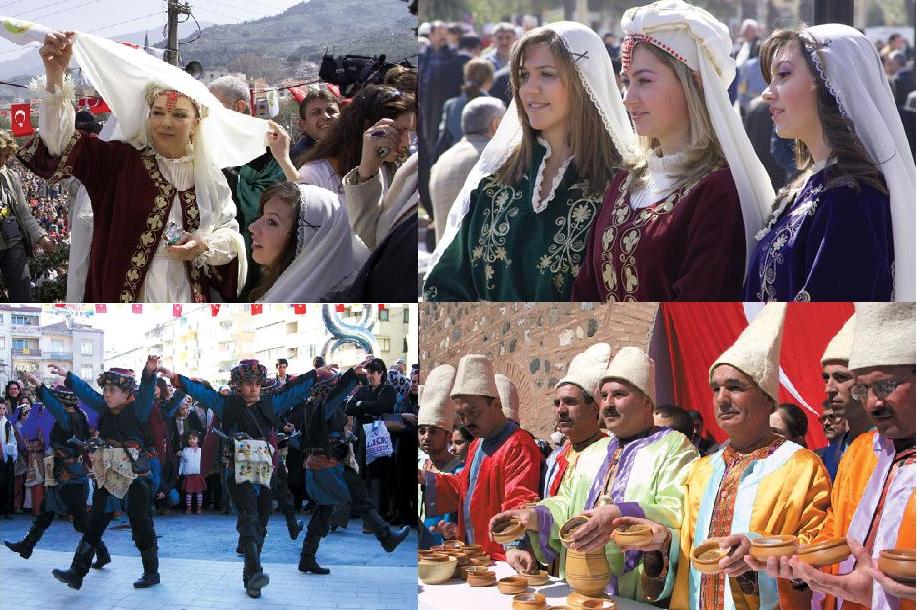
Every year around March 21st, the Nevruz spring festival, the Aegean city of Manisa comes alive for one of Turkey's oldest and most distinctive food traditions. The Mesir Macunu Festival commemorates a story that stretches back to the 1520s, when Hafsa Sultan, mother of Suleiman the Magnificent, fell gravely ill. Legend holds that the physician Merkez Efendi cured her with a paste blended from 41 herbs and spices, and that the Sultan, overjoyed at her recovery, ordered the remedy shared with the public every spring from then on.
That gesture has been repeated for nearly 500 years. Over several days, a team of chefs and apprentices prepare the mesir macunu in large cauldrons, stirring the mixture of cinnamon, ginger, black pepper and dozens of other spices while prayers are recited. The paste is then wrapped by hand in small squares of paper by a team of local women, and blessed by imams before the festival's central moment: thousands of pieces are scattered from the minarets and domes of the Sultan Mosque onto the crowd gathered below.
Catching a piece is considered good luck, with many believing it brings blessings for health, marriage or good fortune in the year ahead. A 45-piece orchestra in traditional Ottoman dress performs throughout the preparation and the toss itself, and the wider festival includes a costumed parade, market stalls and demonstrations of the traditional preparation process. In 2012, UNESCO added the Mesir Macunu Festival to its Representative List of the Intangible Cultural Heritage of Humanity, recognising it as a living tradition that continues to bind Manisa's community together, generation after generation.
Highlights
- ✓500-year-old Ottoman tradition
- ✓UNESCO Intangible Cultural Heritage